Michelle Archive

“A man who has not been to Italy is always conscious of a lack.” – Samuel Johnson

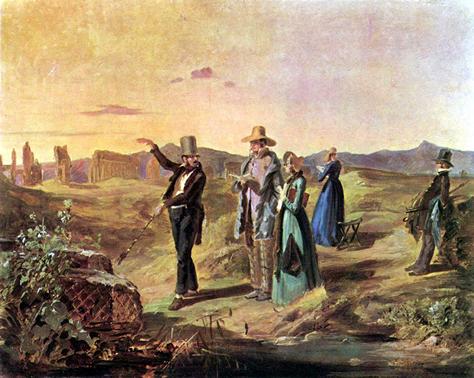
1 GRAN TOUR

In the eighteenth century, Italy became a popular destination for a particular type of educational travel called a Grand Tour. According to Bohls and Duncan, the definition was coined by the English writer Richard Lassels, author of the well-known book Italian Journey (1670).

This colourful name usually refers to the journeys taken by young European aristocrats, whose education could not be complete without a trip to Italy, the foremost stage of classical culture. The Grand Tour of France and Italy became an institution and a rite of passage for many young upper-class travellers, with specific itineraries and themes well defined. Anyone who was anyone in the eighteenth and nineteenth century had to go to Italy sooner or later. But what exactly was it that drove so many intellectuals to go to Italy?

Perhaps the best answer comes from Samuel Johnson: “Almost all our religions and arts, everything that distinguishes us from the savages, has come from the Mediterranean coasts. A man who has never been to Italy is always conscious of something missing from his life.”
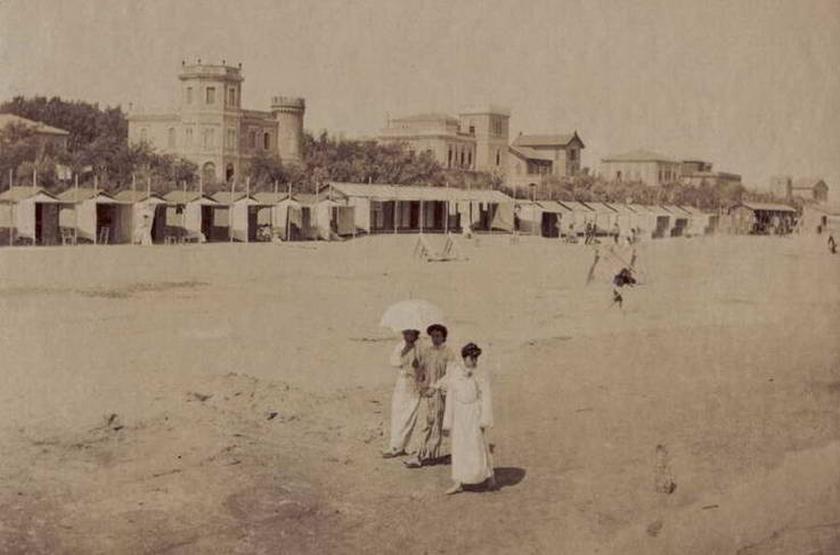
2 GRAN TOUR The many significant archaeological discoveries made in Italy in the last decades of the eighteenth century were a great incentive for young European intellectuals to visit, and the country became the ultimate goal of their cultural trips. Some of the most important of these discoveries were made in southern Italy, with the discovery of Herculaneum and Pompeii and with the rediscovery of the ancient ruins of Paestum.

For European travellers of the eighteenth and nineteenth centuries, Naples also offered an abundance of aesthetic delights. Naples is widely considered one of the most beautiful Italian cities thanks to its many monuments, double bay (which provides a natural theatre), and its temperate climate. It is the magical city of Charles of Bourbon, a pearl of extraordinary elegance. According to the great Russian landscape painter Sil’vestr Shchedrin, Paris was the only other city in Europe which could compete with the charm of Naples.

Naples bewitched countless foreigners; people from all over Europe would converse enthusiastically about the city’s unique charms, especially when it was bathed in a golden glow with every sunrise and every sunset.
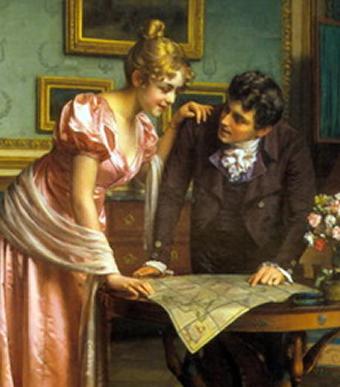
4 GRAN TOURAmongst its many other qualities, this earthly paradise is also home to many beautiful trees and plants. The image of Campania as an abundant, bountiful place full of sweet fruits and plant life dates back to antiquity and is supported by facts. An English writer of the seventeenth century, John Evelyn, dwelt on this aspect: “Even in the late winter here it is summer, always fruitful, and so in mid-February we ate melons, cherries, apricots and other fruits.”

In Naples travellers are able to move in harmony with nature, the sun and the air, in the scent of the sea and plants. However, at the same time, they are deeply steeped in art and literature. For this reason, before leaving, you must “put Goethe in one pocket and Winckelmann in the other.” If you go to Naples, you must also pay a visit to historic Pompeii and Herculaneum, in the shadow of Vesuvius, and you can also easily reach the beautiful island of Capri. Naples was one of the greatest emporium of the Mediterranean, boasting many charms both natural and cultural. That is the secret of its magic, and the reason for its enduring mystery. Even Curzio Malaparte, great writer of the twentieth century, commented on the unique qualities of Naples:

3 GRAN TOUR“Napoli is one of the most mysterious cities in Europe. It is the only city of the ancient world that has not perished like Ilium, like Nineveh, like Babylon. It is the only city in the world that has not sunk in the huge wreck of the ancient civilization. Naples is a Pompeii that was never buried. It is not a city: it is a world. In Naples, the ancient pre-Christian world remained intact on the surface of the modern world. ”
5 GRAN TOUR


LET US TAKE YOU TO YOUR DESTINATION

Did you know that in Venice in 1600 masks were used throughout the year?

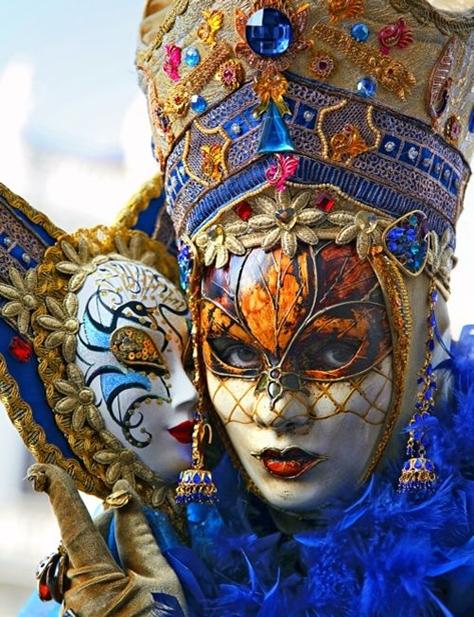
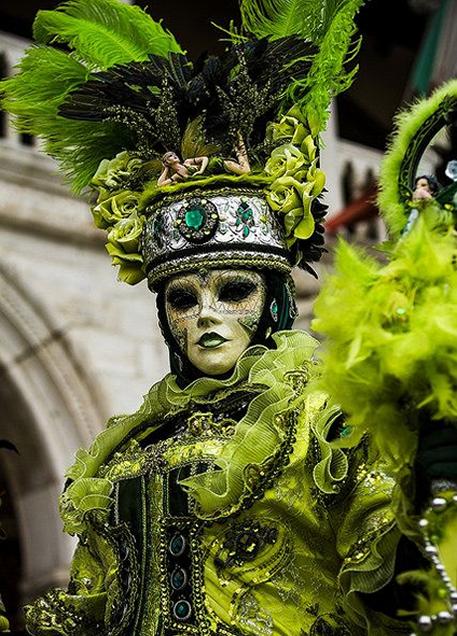
0 Venezia maschereThe Carnival of Venice is renowned for its appeal, excitement and mystery that continues to hold fascination, even now that 900 years have passed from the first document that refers to this famous festival.

We have details of the Carnival festivities dating as far back as 1094, under Vitale Falier, the 32nd  Doge of the city.

There is a document that details public entertainment which took place in the city in the days before Lent.

There is also an official document declaring the Carnival as a public holiday on the last day of Lent in 1296.

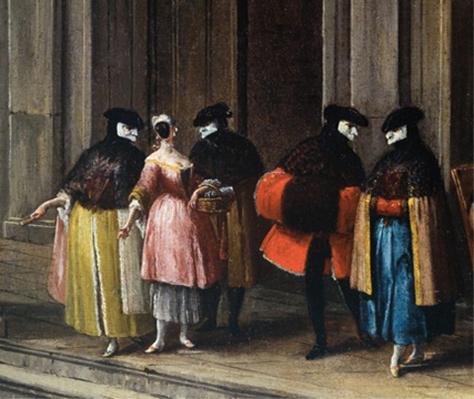
During the eighteenth century, people in Venice would go incognito with the use of masks for fun and as a part of daily life.

At the time, the masks in Venice were used throughout the year.

The Carnival of Venice

This began officially on Boxing Day, on the 26th of December, was interrupted for Lent, and then began again. As a result of this, in the old Republic the Carnival seemed to last all year, or at least so it appeared to visitors.

2 Venezia maschere

In the “calle”, in the fields, and on bridges, visitors would encounter people in masks and often greet them with a cheerful “Good morning, Mrs. Mask”. For many foreign visitors, the practise would have made Venice seem like an exotic paradise.

The Venetian fashion of wearing masks gave people the freedom to overcome the boundaries of class, sex and social differences. When ordinary people wore the traditional carnival costumes, they were on exactly the same level as the wealthy patricians.

Rich and poor celebrated together in the city, and the astute Senate, which recognized this as a perfect outlet for all the social unrest, decreed that no one who was wearing a mask was inferior to another. Masks were permitted almost everywhere, prohibited only in churches and places of worship.

3 Venezia maschere

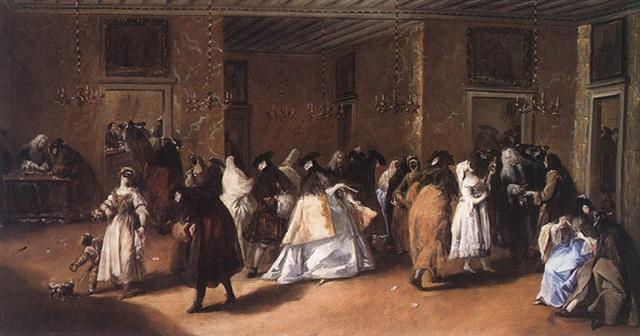
In casinos people would use masks to conceal their identity, to remain incognito and continue to play even though they had previous debts. Many casinos employed “The Pittime”, who had the task of seeking out the people in debt, trying to recognize them even though they had their masks. They would come up behind them and whisper in their ear: “remember that you owe 500 Ducati to that man and 300 to that other person !”

Gambling was a favourite activity in Venice. In 1500, the “Council of 10” forbade it except during Carnival, but in 1638, in an effort to boost state revenue, the government of Venice decided to build a gambling house named “Il ridotto” where patrons were masked except for the “croupiers” who were the fallen nobility. Higher bets where placed in a separate room named ”Saletta dei sospiri”.

After losing a lot of money, people woul leave from a side door, where a gondola was always waiting.

Giacomo Casanova, the famous Venetian lover and keen gambler, was accused many times of cheating in the casinos and was forced twice to move away from Venice. He was imprisoned for gambling debts, but made a daring escape over the rooftops that has become legendary.

Protected by the mask, women also felt free to organize their secret meetings, free from the constraints of their gender. The maske gave them a chance to escape from everyday life and invent a new personality, allowing them to act with total freedom.

Napoleon was the first to prohibit the wearing of masks throughout the year at the time when Venice became Austrian territory. They were still allowed during the Carnival period, which lasted for four or five months a year. With the fall of the Republic, the use of the mask had a sharp decline, until it finally diseappeared from the streets of Venice completely.

In 1979, a group of young Venetian theatre and culture lovers decided to revive the ancient Carnival. Now visitors flock to Venice the last weekend before the start of Lent to experience the celebrations, with more than 500,000 attending each year. People can once more enjoy disguising themselves, creating new identities and blurring the lines between reality and illusion and between past and present.

6 Venezia maschere

Ad Catacumbas in Catacumbas

1 catacumbas principale

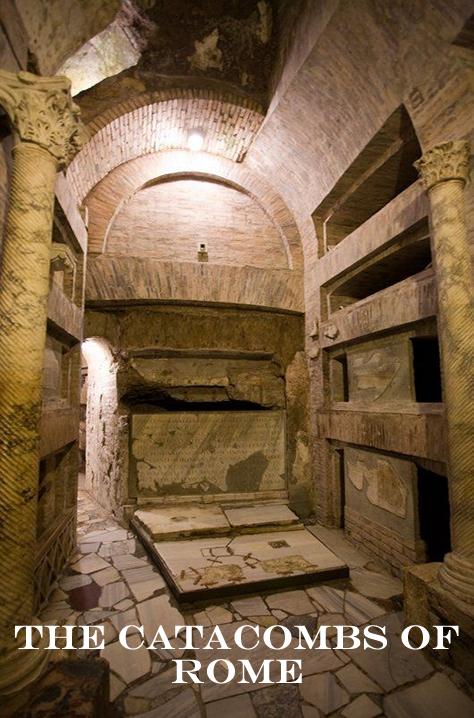
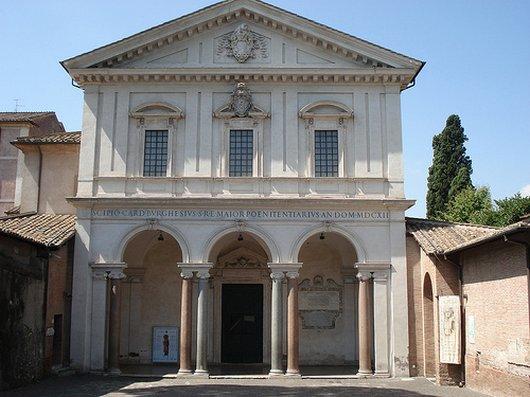
The Catacumbas, or Catacombs, is an area of Rome between the second and the third milestone on the Appian Way, including the church of San Sebastiano. According to tradition, the remains of the Apostles Peter and Paul were transferred here in 258 AD.

The expression Catacumbas was used to name the burial place of the Apostles, as we can see from inscriptions, and from here the word then came to mean any underground cemetery.

This meaning has been documented since sec. IX, but it goes back to a much earlier time.

The etymology of the word is unclear, and many possible origins have been proposed.

One theory is that it developed from the Greck κύμβη, some others say that came from the Latin kata tumbas, which means “among the tombs”.

Following the teachings of the Church Fathers, Christians associate the idea of ​​death with a long sleep awaiting the resurrection of the body. According to this belief, they would bury the dead rather than cremating them.

The place of burial was to be outside the walls of Rome (and cities in general), in accordance with the ancient Roman law.

The Etruscans, the Jews and the Romans often placed their dead in underground cells in different parts of Italy, both in Rome and elsewhere. The large chamber tombs contained the coffins of those who had been buried, as well as columbarium containing cremated remains, as the ancients respected people of all religions and their burial practises. Corridors were dug connecting these burial tombs, resulting in extensive underground passageways. Christians wanted to make sure that the final resting places of their loved ones were secure while still having access to the burial tombs; religious services and memorial services were often conducted in the catacombs.

2 catacumbasIt is estimated that there are more than 1000 km of catacombs running beneath the ground of Rome, and, since they are constantly discovering new ones, we can be certain that there are many more we don’t know about yet.

A small Catacomb as it is St. Agnes alone is approximately 600m long, and includes around 5763 graves.

The catacombs are located along the roads outside the ancient city of Rome, most between the first and third mile.

Their extension is limited by deposits of volcanic tuff and areas of swampy ground. As demonstrated recently by excavations under St. Peter’s Basilica in Rome and the Hypogeum of Via Latina, pagan and Christian tombs were often located near each other. Pagan burials continued taking place in the area until the fourth century, as demonstrated by pieces of sarcophagi falling into the galleries below. Finally a pagan cemetery would gradually turn into a Christian catacomb.

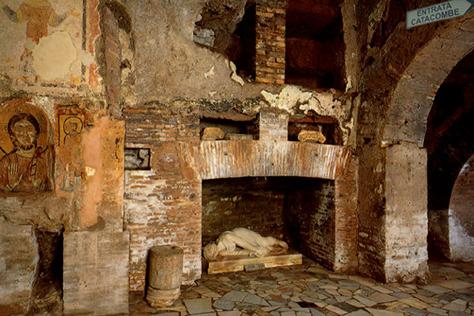
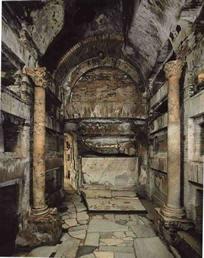
The Catacombs of Rome are presented as an underground network of corridors of varying width and irregular layout, arranged on one or more floors; some have up to five floors. Along these corridors are niches, or rectangular holes, enclosed by a stone slab. A deceased person was laid to rest in each of these niches. Sometimes the bodies were placed under an arcosolium, a kind of arc carved in the ceiling, which serves to define and enclose the tomb placed under it.

3 catacumbas

The available space is maximized, as the graves are very close together. In very rare cases, the arrangement of corridors and tombs were lavishly decorated, as in “New Hypogeum” discovered in 1956 at the Via Latina, with its unusual paintings of Pagan and Christian themes. In other cases, ancient stone quarries or natural caves were used as catacombs. Generally, however, it seems that most of the underground tunnels are due to the work of Christians.


Roman law declared that burial sites were inviolable and sacred. The first catacombs were created under the command of the great patrician families who owned many land assets and were faithful to Christianity, and were intended for the private burial of their family members. Soon, however, both in Rome and in the Empire, associations of Christians began to handle the management of cemeteries, and that made it possible to connect catacombs in nearby areas. In the third century, that organization was perfected and formal funeral associations took possession of the catacombs. Pope Callistus is thought to have initiated this reform.

4 catacumbas

During the first two centuries AD, the Christian cemeteries had enjoyed legal protection and management had taken place in a peaceful way. However, during the persecution of Christians in the Roman Empire, Christian funeral practices began to be targeted by the authorities. In 257, under the edict of Valerian, any visit to the Christian tombs was forbidden. According to this edict, Pope Sixtus II was arrested and sentenced to death for holding a meeting in the cemetery of Praetextatus.

Some catacombs belonged to very illustrious personages; the cemetery of Domitilla on the way Ardeatina, for example, is named after a member of People Flavia, Flavia Domitilla. Very often a catacomb was developed in connection with and around the tomb of a martyr. Burial places reserved for the illustrious deceased were marked by a building, as is indicated in the Liber Pontificalis (Book of the Popes) and the inscription on the tomb of St. Peter.