3000 skeletons found under London railway station
1 Londra metropolitana

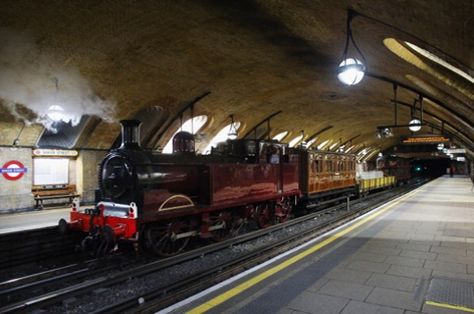
After the recent discovery of human bones underneath a supermarket in Paris, London has also revealed its hidden skeletons. During excavations for the construction of a new railway line, the remains of about 3 thousand people were discovered. It is thought that they could be the victims of the great plague that struck the population of London in the seventeenth century.

Archaeologists from MOLA (the Museum of London Archaeology) are digging up the remains and further analysis with then be conducted. It is hoped that this will shed light on the historical epidemic that devastated the British capital.

THE PLACE OF DISCOVERY: The exceptional discovery was made at a construction site near Liverpool Street train station. The gigantic mass grave originates from “Bedlam”, the first municipal cemetery located outside the city walls. Between 1569 and 1738, the cemetery was used to bury those who could not afford a tomb in the church or who had been discriminated against on religious or political grounds. The ancient cemetery owes its name to the psychiatric hospital that once stood on the same ground, the Bethlem Royal Hospital (also known as Bedlam, later moved out of London).
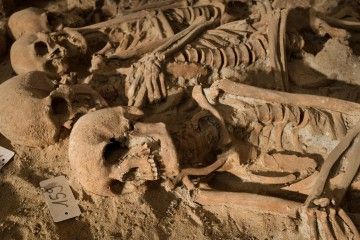
2 Londra scheletri sotto la metropolitana di LondraTHE GREAT PLAGUE: Preliminary excavations conducted at Liverpool Street had already revealed more than 400 skeletons. Scholars speculate that the 3 thousand skeletons now are, in large part, the remains of the great plague that caused the death of more than a fifth of the entire population of London between 1665 and 1666. Although the documents from the time do not allow for exact calculations (the deaths of the poor were not being registered), it is estimated that the epidemic claimed between 75 thousand and 100 thousand victims. The infection subsided in conjunction with the Great Fire of London, which destroyed a large portion of the city in September 1666.

RACE AGAINST TIME: Nick Elsden, project manager of the MOLA, said that the Bedlam cemetery is an opportunity to shed light “on a stage of the fascinating history of the city, covering the transition from the Tudor period to modern and cosmopolitan London.”
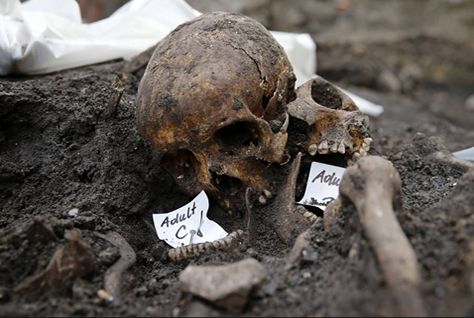
3 Londra scheletri sotto la metropolitana di LondraThere is a team of 60 archaeologists working on the site. They have 6 weeks to excavate all the skeletons and document all their findings, since the construction of the railway line cannot wait for too long. Before being reinterred in another cemetery, the remains will be analyzed, with the dual objective of obtaining evidence on the bacterial strain which caused the epidemic and to find out more about demographic details, such as the diet and lifestyle of Londoners during this era.
Anthrax and bubonic plague found in the New York subway

1 Metropolitana a New York

There are hundreds of species of bacteria in the New York metropolitan area, many of which are still unknown. It is thought that this could include many dangerous bacteria, including anthrax and the bubonic plague.

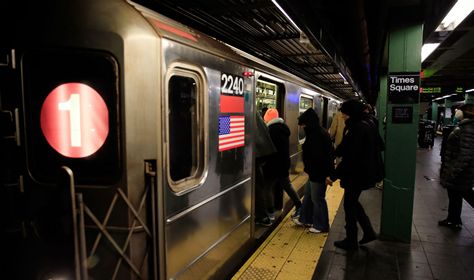
Every year, about 1.7 billion people travel through the New York subway system, which consists of over 960 km of rail network. We know that the subway systems in the New York metropolitan area, like many subways around the world, are not exactly totally neat and clean. However, it is still quite shocking to discover that traces of DNA of anthrax and bubonic plague have been found there.

Anthrax is an infection caused by the bacterium Bacillus anthracis. It occurs mainly in herbivorous animals, but can also be transmitted to humans. As it produces a very high mortality rate, it has even been used as a bacteriological weapon.

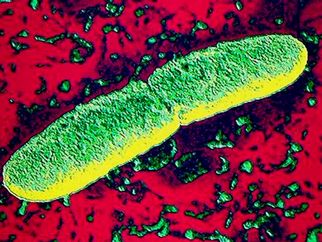
2 Metropolitana a New YorkBubonic plague is linked to the bacterium Yersinia pestis, and has caused several deadly epidemics in various parts of the world and in different time periods. The best known is the one that struck Europe between 1400 and 1600.

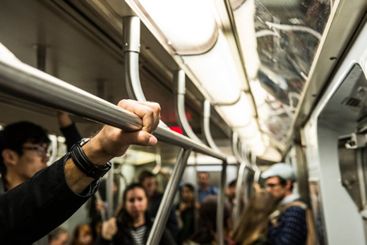
BACTERIA FOUND IN BINS AND ON HANDRAILS: The process of detecting and mapping bacteria on the subway began in 2013, and the project is called PathoMap. Since that time, there haven’t been a recorded cases of plague or anthrax poisoning. The last case of people with the plague was in 2002, when two tourists contracted the disease by visiting a ranch in New Mexico, where the disease is endemic in the wild, and brought it back to New York with them. So where did this lead to? It seems that the bacterium has actually survived over all that time and is still in the city. Traces of the plague were found in a trash bin and on some railings (it is particularly unclear for researchers as to how the bacteria got there – there has been speculation that it may have come from mice walking along the railings).

3 Metropolitana a New York batterio della peste bubbonicaA MARINE ECOSYSTEM: The discovery of these bacteria and many others was conducted by researchers at Cornell University and the results were published in Cell System. The intent of the research was to create a map of the bacteria present in the subway, and has led to the identification of around 1,688 bacteria, including an entire “marine ecosystem”.

NOTHING TO FEAR FROM THESE NEW SPECIES: Among the bacteria found, it seems that over 450 categories are resistant to drugs, even if their presence is at very low levels. Christopher Mason, the project manager, stated: “What we have found tells us two things: first, the fact that the human body shows a strong resistance to bacterial attack and is able to continually adapt to the environment in which it lives. Secondly, the presence of certain bacteria in limited quantities does not constitute a threat to human health.”

4 Metropolitana a New York batterioSo, it seems that there is no fear of contracting anthrax or plague for those travelling by subway. The study also allowed us to discover hundreds of hitherto unknown bacterial species that are apparently ubiquitous in urban areas. But what created the marine ecosystem? The researchers say its origin is to be found in Hurricane Sandy, which struck the city in 2012 and flooded some metro stations. The bacteria that were in the sea have adapted to the conditions existing in the city and in the tunnels underground.

Many famous Parisian museums may ban selfie sticks

0 famous Parisian museums

The selfie craze was taken one step further with the introduction of the “selfie stick” – an extendable pole with an attachment for your mobile phone, allowing you to take selfies from a distance and capture more of your backdrop in the photo. The sticks have many fans including Boris Johnson and Barack Obama, and it is now common to see the poles extending from crowds of museum visitors and tour groups.

However, many major concert venues, sports grounds, museums and galleries around the world are starting to crack down on their use. Now, several Paris museums are planning to ban the devices to avoid potential damage to valuable artworks.


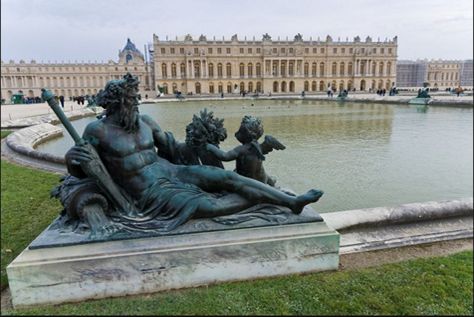
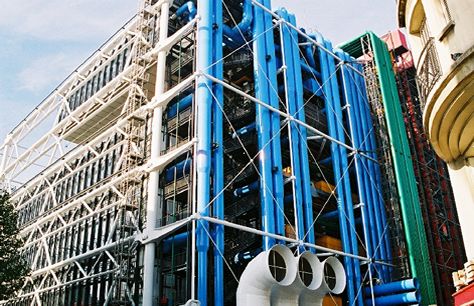
1 famous Parisian museumsSteps have already been put into place at some of the major galleries and tourist attractions of the French capital – visitors at the Palace of Versailles and the Pompidou Centre are now requested to put away their devices, and it looks likely that an actual ban is going to be brought in over the next few weeks. Other Parisian museums, such as the Musee d’Orsay, home of many Impressionist artworks, already forbid visitors to take pictures, so they have no need to introduce a ban on selfie sticks.


2 famous Parisian museumsManagement at the Louvre are also concerned about the use of selfie sticks. The world famous museum gets extremely crowded with thousands of daily visitors who flock to see their priceless artworks, including the Mona Lisa. A formal ban is not in place just yet at the iconic gallery, but a spokeswoman stated: “Visitors must follow the gallery rules and not point any objects at the paintings or sculptures.”


3 famous Parisian museumsA British visitor to the Louvre,Peter Greene, 41, who used a selfie stick to take a family portrait outside the gallery stated: “I don’t see the problem with using selfie sticks in outdoor areas, but I can see why they may cause an issue in a confined space – especially one as crowded as the Louvre.”


4 famous Parisian museumsSelfie sticks are already banned in many public areas, venues and attractions in London, including Tottenham’s White Hart Lane stadium, Wembley Arena and the O2 Arena, due to fears that they could be utilised as weapons or obstruct people’s views. Bans have also been introduced in the USA: Washington DC’s Smithsonian complex, the world’s largest museum and research organisation, has a complete ban in place already. In South Korea, it is actually illegal to use unregistered selfie sticks as it is thought their Bluetooth technology could have adverse effects on telecommunications signals. People who break this law are liable for fines of up to £17,000.